
Key Takeaways
- Advancements in technology are revolutionizing emergency response communications, enhancing speed and accuracy.
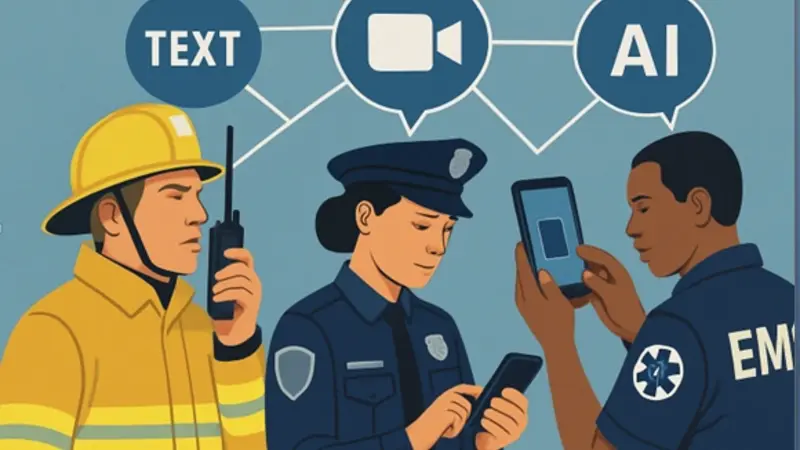
- Integration of text, video, and AI-driven tools is improving situational awareness for first responders.
- Interoperability and secure communication networks are critical for effective emergency management.
Introduction
The way emergency responders communicate with each other and with the public has never been more important. As the world becomes more interconnected, so too do the systems that keep us safe during crises. Modern emergency response requires instantaneous access to a broad range of communication channels so that information can be evaluated and acted upon without delay. In this landscape, advanced platforms such as http://www.quickresponse.net/monitoring-solutions/asap-to-psap/ have emerged, helping to streamline emergency alerts and dispatch for communities nationwide.
The shift from relying solely on voice calls to integrating multimedia such as text messages, images, and video marks a turning point for agencies, enabling a more nuanced understanding of events as they unfold. This digital transformation is allowing the responders to gather vital information faster than ever before, improving outcomes in situations where every second counts.
Next-generation emergency communications deliver life-saving benefits not only by speeding up response times but also by enabling comprehensive, real-time responses. These systems empower dispatchers and first responders alike to coordinate more effectively, leading to cohesive strategies during high-stakes moments.
This evolution is fueled by both technology and policy. Public safety agencies are moving beyond traditional radio and telephone systems to embrace secure networks engineered specifically for reliability under pressure. With a focus on integrating new communication pathways and maintaining robust interoperability, the stage is set for a safer, more connected future.
For a broad overview of advancements in first-responder communication technology and the latest public policies surrounding emergency communications, resources from The Associated Press offer deeper insight into this ongoing transformation.
Transforming Emergency Response Through Next Generation 911 Technology
Next Generation 911 (NG911) systems represent a crucial step forward for emergency response. Unlike legacy 911 networks that support only phone-based voice calls, NG911 leverages high-speed IP-based solutions to enable the public to send text, video, photos, and other data. When a caller shares an image or video of an unfolding incident, dispatchers can better understand the scene and relay precise information to field responders.
One compelling example comes from Leon County, Florida, which has embraced NG911 to boost awareness and agility during emergencies. Their upgraded system enhances situational awareness, translating into more effective interventions for residents. More details on this implementation can be found in the press release.
Integration of Text and Video Communications
Over the past year, public adoption of text and live video for emergency notifications has soared. In fact, recent studies have shown a 118% year-over-year increase in emergency texts and a 70% rise in video submissions to 911. Such dramatic growth underscores the importance of alternative communication channels when residents are in crisis. Text and video empower those with language barriers, disabilities, or who are unable to make a traditional phone call.
The use of multimedia greatly improves the accuracy of shared information, enabling faster, smarter resource deployment. As dispatch centers become equipped to receive and process this variety of content, the face of public safety is rapidly evolving to become more inclusive and accessible.
Enhancing Interoperability Among Agencies
During regional emergencies, seamless coordination between fire departments, law enforcement, EMS, and other agencies is mission-critical. Interoperability ensures these entities can exchange updates, warnings, and actionable insights in real time, regardless of whether they operate on separate networks or use different communication platforms. The Department of Homeland Security has continually emphasized achieving true interoperability as a top priority for protecting both first responders and civilians during large-scale events.
Interconnected Communication Networks
Solutions addressing interoperability challenges include cross-jurisdictional radio networks and collaborative dispatch systems that operate consistently regardless of the equipment a team uses. Initiatives at the federal and state levels are also expanding the role of open standards and shared communications infrastructure, further empowering multi-agency response efforts.
Leveraging Artificial Intelligence and Automation
Integrating artificial intelligence (AI) with emergency response has unlocked powerful new capabilities, from data analysis to resource management. AI-driven automation can sift through incoming reports, prioritize incidents by severity, and direct attention where it matters most freeing up dispatchers to focus on high-priority emergencies and streamlining collaboration between incident commanders and on-the-ground personnel.
Predictive Analytics in Crisis Situations
AI also facilitates predictive analytics, providing agencies with early warnings of potential surges in call volume, increased fire risk due to weather, or patterns of illness in a community enabling preemptive action that can reduce harm and save lives.
Addressing Cybersecurity Challenges
As emergency communications increasingly rely on publicly accessible networks and sophisticated software, the risks posed by cyberattacks grow more severe. Recent incidents have revealed vulnerabilities that can take down entire alert systems, threatening the safety of whole regions. Rigorous cybersecurity protocols such as continuous monitoring, regular updates, and employee training are vital to maintaining system integrity.
Federal guidelines are being updated to reflect the real-world threats faced by emergency agencies, with investments in network segmentation, data encryption, and backup communications paths becoming standard practice. Ongoing collaboration with cybersecurity experts will be essential as attackers continue to target critical infrastructure.
Future Prospects and Innovations
The future of emergency response will be shaped by breakthroughs such as the rollout of 5G wireless networks, which promise enhanced bandwidth, ultra-low latency, and expanded coverage. These advances will enable next-gen systems to transmit high-definition video in real time and support emerging technology, including augmented reality overlays and drone-assisted rescues. The national adoption of mass notification systems is expected to provide greater reach and reliability for public alerts, regardless of location or time of day.
Collaborative research between public, private, and nonprofit sectors will accelerate technological adoption, establishing a resilient framework for crisis management in the years to come. The ongoing evolution of emergency response communication is driven by public safety-conscious innovation, delivering tangible benefits to every community.
Conclusion
As emergency response communications continue to evolve, next-generation technology is helping agencies rise to new challenges. By embracing multimedia channels, artificial intelligence, interoperability, and advanced cybersecurity, communities are well-positioned to enhance safety and response outcomes. A deep commitment to cross-agency collaboration and public engagement will ensure that innovation remains at the forefront of efforts to protect and serve in an unpredictable world.
For more informative articles, visit our site daily.