
Key Takeaways:
- Artificial Intelligence (AI) is central to modern Revenue Operations (RevOps), enhancing forecasting and automating tasks.
- No-code automation platforms are democratizing process automation, allowing teams to build workflows without extensive technical skills.
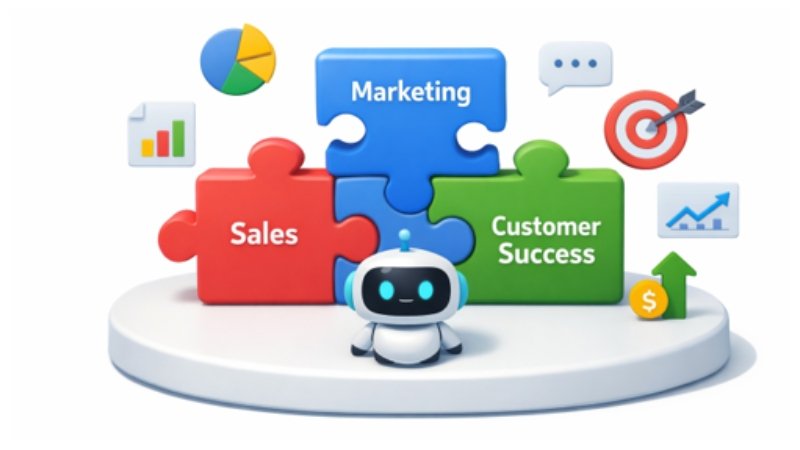
- Aligning sales, marketing, and customer success teams is crucial for a cohesive revenue strategy.
- Customer-centric approaches and data-driven decision-making are essential for sustainable growth.
Today’s business landscape is rapidly evolving. Companies are leveraging technology and new strategic frameworks to achieve sustainable growth and remain competitive. A major focus for many organizations is the adoption and optimization of revenue operations processes. Revenue operations (RevOps) is an end-to-end organizational function that unites sales, marketing, and customer success activities, ensuring all teams work toward a common goal. Modern trends in RevOps point to an increased reliance on data, artificial intelligence, and automated workflows. These trends are not only reshaping internal collaboration but are also profoundly impacting the customer experience and the accuracy of financial planning.
As companies navigate this shift, the democratization of automation and integration of no-code tools are empowering more employees to contribute to process improvements, regardless of their technical background. Such advancements pave the way for greater agility and scalability as markets change.
Seamless cross-team alignment, coupled with robust technology adoption, defines the organizations that thrive in an increasingly customer-centric and data-driven marketplace. Decision-making is no longer about instinct alone, but grounded in the evidence provided by real-time data and advanced analytics tools.
AI Integration in RevOps
Artificial Intelligence plays a transformative role in the evolution of Revenue Operations. Modern AI solutions are enhancing the ability of companies to forecast revenue with greater precision. These systems process vast amounts of historical and real-time data, analyzing deal progression to surface patterns that inform finance and leadership teams.
As AI continues to mature, organizations are increasingly adopting AI-driven tools for business forecasting and operational streamlining. Businesses integrating AI into RevOps are experiencing improved operational agility and more reliable growth projections, allowing them to allocate resources more wisely and quickly adjust strategies as market conditions shift.
No-Code Automation Platforms
No-code automation platforms are laying the groundwork for a democratized approach to process efficiency within RevOps. Instead of relying solely on IT support, teams can now use tools with visual interfaces, like Zapier and n8n, to design and execute automations across applications and workflows. No-code not only enhances productivity, but it also reduces costs and empowers more team members to experiment with and refine business processes.
The acceleration of no-code and low-code platforms is making it possible for non-developers to quickly address operational inefficiencies and adapt to new revenue strategies. The projected growth of this market highlights its critical role in future business strategies, allowing organizations to iterate faster while maintaining robust control over workflows.
Aligning Sales, Marketing, and Customer Success
Revenue Operations is only as successful as its ability to align sales, marketing, and customer success teams. This triad plays an essential role in converting leads into loyal customers and ensuring a seamless journey throughout the customer lifecycle. Efforts to break down silos and foster communication between these departments are resulting in higher lead conversion rates and more personalized customer interactions. Industry findings from Harvard Business Review suggest that organizations capable of unifying these operational functions frequently outperform their competition. Unified teams can act on customer insights faster, adapt messaging and tactics on the fly, and deliver consistent value through each touchpoint.
Customer-Centric Approaches
A customer-centric mindset is at the heart of long-term revenue success.Strategies include using data and direct feedback to craft personalized offerings and proactively addressing customer challenges before they escalate.
Proactive customer success means more than merely resolving issues; it involves anticipating potential pain points and designing support structures that promote satisfaction and loyalty. This approach transitions the focus from transactional selling to building outcome-driven, supportive relationships that align with customer goals.
Data-Driven Decision-Making
The top-performing companies use data as the backbone of their decision-making processes. With advancements in analytics software and integrated dashboards, leadership teams are able to monitor crucial metrics in real time, track the effectiveness of revenue operations initiatives, and quickly pivot strategies when needed. Consistent use of data-driven insights creates a culture of accountability and transparency. Leaders base their plans on measurable results and predictive analytics, which boosts confidence in budget allocations and strategic pivots. This reliance on objective intelligence frequently results in outperformance when compared to companies that rely solely on intuition or outdated practices.
Future Outlook
The continued integration of technologies such as blockchain and IoT will also provide unprecedented insights and secure transactional transparency. Deeper management of customer experience, through innovative feedback tools and predictive analytics, will allow companies to meet customers where they are. By responding quickly to evolving needs, businesses can ensure customer satisfaction and drive sustainable growth. Staying alert to these trends and swiftly adopting new RevOps methodologies is essential for building resilient, future-ready organizations. Click here for more information.