

Key Takeaways
- Data-driven recruitment enhances efficiency and accuracy in the hiring process.
- AI and analytics can reduce unconscious biases and promote diversity within organizations.
- Predictive analytics drive better candidate-to-job matches and lower turnover.
- Real-time data enables agile and responsive hiring, keeping companies ahead of talent trends.
Recruitment is entering a transformative era as organizations move away from traditional hiring methods in favor of data-driven strategies. Today’s leading employers leverage analytics and artificial intelligence (AI) to overhaul their processes, identifying stronger candidates, reducing bias, and dramatically improving hiring outcomes. Part of this transformation involves guarding against challenges such as fake job applicants, as digital solutions make it easier to verify and validate candidate information at scale.
Data-driven recruitment tools enable recruiters and human resource professionals to make informed decisions. Gone are the days of intuition-based judgments or inefficient manual screening. By analyzing candidate data, organizations can enhance their ability to match individuals to roles while upholding fairness and compliance in their hiring practices.
The Shift Towards Data-Driven Recruitment
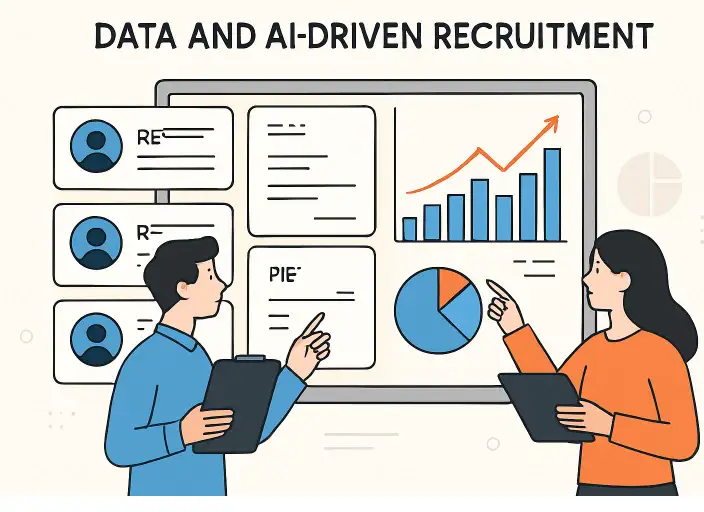
Traditional hiring practices, though established, often relied on human judgment and subjective decision-making, making them prone to inefficiencies and bias. With data-driven recruitment, organizations harness robust analytics to move past gut feelings and outdated processes. By integrating solutions such as applicant tracking systems, AI-powered resume screeners, and advanced talent analytics platforms, recruiters can assess more candidates faster and with greater accuracy.
This modern approach is facilitating a culture of evidence-based hiring. Recruiters collect and analyze data from various stages of the hiring funnel, identifying bottlenecks, measuring candidate engagement, and refining sourcing strategies to access high-quality talent pools. The adoption of such technologies is helping employers pivot quickly in dynamic labor markets, enabling them to remain competitive in attracting the best-fit candidates.
Integrating data at every stage of recruitment is not just about efficiency—it’s also about enhancing transparency and providing a better candidate experience. When companies employ these innovative approaches, they minimize the risk of making poor hires and wasting resources, ultimately reinforcing their employment brand in a positive light. Businesses that adopt data-driven hiring strategies often see significant improvements in time-to-hire and overall retention rates.
Enhancing Efficiency with AI
AI-driven recruitment solutions are revolutionizing the way organizations approach hiring. By automating tasks such as resume parsing, initial candidate screening, and even first-round interviews, AI enables hiring teams to focus on higher-value activities that require human judgment and empathy. For example, major HR technology providers have deployed conversational AI assistants that answer candidate questions, expedite pre-qualification, and maintain candidate engagement throughout the recruitment process.
One notable development is the integration of AI-driven candidate experience capabilities that streamline hiring by automating routine interactions. This approach reduces administrative workload, shortens the time-to-hire process, and creates a more engaging experience for applicants. As a result, human recruiters can focus more on personalized assessments and meaningful interviews with the most qualified candidates.
Reducing Bias and Promoting Diversity
Unconscious bias often complicates fair, inclusive hiring. Human decisions are invariably influenced by personal experiences and cultural factors—even when recruiters intend to be objective. AI and data analytics represent a key step forward, as they focus strictly on objective performance metrics and job criteria.
Research from the Josh Bersin Company found that organizations using AI for recruiting not only cut down the time-to-hire by up to threefold but also reported a deeper alignment between candidate capabilities and role demands. These improvements help ensure that hiring is based on talent and experience, rather than personal connections or hidden biases. Further, the removal of identifying details during early-stage reviews—enabled by algorithmic screening—supports a more diverse candidate pool.
Ensuring AI-driven Fairness
While machine learning can help reduce bias, it is critical that organizations continuously test and update their algorithms to ensure they do not inadvertently perpetuate historical inequities. This ongoing vigilance helps capitalize on the promise of more equitable recruitment driven by data.
Predictive Analytics for Better Matches
Predictive analytics uses historical data to identify patterns associated with top-performer characteristics, turnover risks, and future staffing needs. By incorporating insights from previous hiring successes and failures, recruiters can determine the indicators most strongly correlated with high workplace performance and long-term retention.
For example, by tracking career trajectories, educational backgrounds, and cultural fit across successful hires, companies can create detailed candidate profiles that maximize the likelihood of success in specific roles. This targeted approach helps minimize costly hiring mistakes and supports ongoing organizational growth and development. Many leading employers cite reduced early attrition and improved team performance as key outcomes of implementing predictive analytics in the hiring process.
Real-Time Data for Agile Hiring
The ability to access and analyze real-time data is now a defining feature of leading recruitment functions. During talent shortages or surges in demand for specific roles, real-time information can be used to quickly identify suitable candidates, optimize outreach, and fill open positions faster than competitors.
This agility enables organizations to rapidly adjust their sourcing strategies, compensation benchmarks, and candidate engagement tactics. Ultimately, those who leverage live insights are best positioned to anticipate shifts in talent markets and act decisively, further elevating their employer brand and ensuring continued organizational success.
Challenges and Considerations
Despite the advantages of data-driven recruitment, careful attention must be paid to several challenges. First, data privacy regulations require robust safeguards to protect candidate information throughout the hiring process. Second, the algorithms powering AI systems must be continuously monitored and updated to prevent the codification of outdated biases or failure to adapt to evolving workforce expectations. Lastly, HR teams must invest in digital skills training to maximize the value of these advanced tools while ensuring ethical and compliant implementation at every level.
Conclusion
Data-driven hiring is reshaping recruitment by empowering organizations to hire more effectively, efficiently, and fairly. Companies that embrace AI and analytics enjoy a distinct edge in candidate quality, workforce diversity, and hiring agility. With the right technologies and a commitment to continuous improvement, data-driven recruitment practices will continue to be at the heart of successful talent strategies for years to come. For more information, visit our website.