
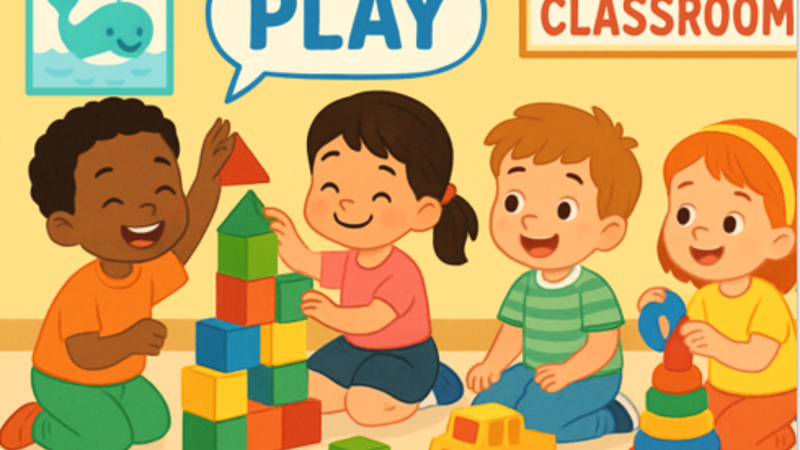
Play is at the heart of childhood and is vital to children’s growth and development. Engaging children in play-based activities does more than keep them entertained. It fosters curiosity, strengthens essential skills, and builds a foundation for academic and personal success. For families seeking the right environment, schedule a tour at Building Blocks of Windsor to see a thriving play-based approach in action. By understanding the profound benefits of play-based learning, parents and educators can make informed choices about a child’s earliest experiences. Children naturally explore, experiment, and express themselves through play. These moments of creativity and movement are not random. They are orchestrating brain development, motor skills, and social intelligence. Play-based learning harnesses a child’s innate desire to explore and turns it into powerful developmental lessons, making learning enjoyable and memorable for young minds.
Cognitive Development
Play-based activities stimulate essential cognitive processes like problem-solving, memory, and focus. As children arrange puzzle pieces or build elaborate structures with blocks, they are learning about balance, spatial awareness, and cause and effect. These skills are not isolated but form the core thinking abilities required for reading, math, and science in their school years. According to research from the National Association for the Education of Young Children, purposeful play leads to richer brain development and more efficient learning.
Additionally, when educators carefully observe and engage children in play-based tasks, they can scaffold learning by asking open-ended questions and encouraging reflection on their experiences. This boosts critical thinking and deepens comprehension of new concepts. As children revisit similar play experiences over time, they build cumulative knowledge that supports flexible thinking and lifelong learning. The iterative process of experimenting, failing, and trying new solutions further enhances memory retention and the ability to transfer knowledge between contexts.
Social Skills
Learning to communicate and collaborate is a cornerstone of early childhood success. During play, children negotiate rules, resolve conflicts, and share ideas, as each interaction helps to build empathy and social confidence. Games like “pretend school” or “grocery store” allow children to practice cooperation and see the perspectives of others. Group play also introduces children to teamwork, preparing them for classroom environments and group activities later in life.
Regular social play provides ongoing opportunities to form relationships with peers, test boundaries, and learn appropriate social cues. Children develop essential habits, such as taking turns and listening actively, which are directly transferable to future classroom and life settings. In addition, positive play experiences help foster a deep sense of belonging and community, both of which have been shown to influence long-term emotional well-being positively. By navigating complex social interactions early on, young children develop a resilient sense of self within a broader social world.
Emotional Growth
Play provides a safe environment where children can express a range of emotions and develop their emotional intelligence. Through imaginative or dramatic play, children work through fears, joys, and uncertainties. For example, a child may act out being a doctor after a visit to the clinic, processing both curiosity and anxiety. These experiences help children build resilience, develop coping mechanisms, and better manage their emotional responses as they grow. As children encounter setbacks or experience triumphs within play scenarios, they naturally practice self-regulation and perseverance. Supportive educators can nurture this growth by validating children’s emotions and modeling healthy ways to navigate challenges. When children feel safe and understood, they are more willing to take risks, try new activities, and express themselves with confidence. This sense of emotional security prepares them to tackle complex feelings and relationships throughout their lives.
Physical Development
Activities that encourage movement, whether outdoors or in a classroom, are integral to developing fine and gross motor skills. Running, climbing, jumping, and balancing help children build strong muscles, coordination, and spatial awareness. Fine motor tasks such as drawing, threading beads, or building with small blocks enhance dexterity and precision. The Centers for Disease Control and Prevention (CDC) emphasizes the importance of physical activity for young children’s healthy growth and lifelong well-being. Active play experiences also foster healthy habits, encouraging children to enjoy movement and physical activity from an early age. This can reduce the risk of sedentary behaviors and related health issues as people grow older. Encouraging children to be physically active through play rather than structured exercise often leads to greater long-term engagement and self-motivation to stay active.
Creativity and Imagination
When children dress up as astronauts or build castles from cardboard boxes, they are developing creativity and a willingness to imagine new possibilities. Creative exploration is central to intellectual flexibility and innovation. Play allows children to test ideas, experiment with outcomes, and learn from mistakes in a risk-free environment. These experiences encourage critical thinking and foster the confidence to approach problems creatively, skills that remain valuable long after childhood. Imaginative play also supports role reversal and empathy by allowing people to experience life from someone else’s perspective. As children invent new worlds, characters, and scenarios, their capacity for symbolic thinking and storytelling grows, laying a strong foundation not just for academic success but also for a vibrant, adaptive approach to life’s challenges. Creativity nurtured in early years can influence innovation in adulthood and across a person’s lifetime.
Language and Communication
Children immersed in play-based learning environments naturally absorb new vocabulary and hone their communication skills. When children describe their games, negotiate roles, or ask for help, their language grows more complex and expressive. In pretend-play scenarios, such as running a pretend store, children learn about money, quantities, and relevant terminology. These interactions serve as a foundation for reading comprehension, storytelling, and academic success in literacy. Beyond building vocabulary, play-based environments promote active listening and the ability to adjust communication styles for different situations and audiences. Storytelling, singing, and group discussions during play allow children to develop both receptive and expressive language skills. As their confidence in communication grows, so does their enthusiasm for reading and writing tasks both inside and outside the classroom.
Implementing Play-Based Learning
Effective implementation of play-based learning requires thoughtful planning and skilled educators. Teachers design engaging activities that meet developmental milestones and educational standards while allowing children the freedom to explore, solve problems, and collaborate. Environments that encourage varied forms of play, sensory, imaginative, and physical, help ensure that each child can access meaningful learning experiences tailored to their abilities and interests. Teachers also observe and assess play to guide future activities and individualize instruction. Parent involvement is also important for the successful integration of play-based learning, both at home and in partnership with educational settings. By reinforcing play principles, providing open-ended materials, and participating in their child’s play, families can extend the learning environment beyond the classroom. This holistic approach nurtures a consistent, supportive foundation for young children’s growth and lifelong love of learning.
Conclusion
Play-based learning transforms everyday moments into powerful opportunities for growth. It supports cognitive, social, emotional, and physical development, nurturing well-rounded children ready for the challenges of school and beyond. Families and educators can work together to create rich, play-focused environments that empower children to thrive now and for years to come. The evidence is clear: play is serious work for young learners, laying the foundation for lifelong joy in learning.
Embracing play as a central part of early education is not only an investment in academics but in cultivating resilience, creativity, and a love of discovery. As researchers and leading child development experts continue to advocate for play-based learning, communities and schools should strive to integrate these principles into everyday practice. By doing so, we honor children’s developmental needs and set them on a path to confident, competent, and joyful learning throughout life. A play-based learning mindset opens new possibilities for children, teachers, and families to engage, grow, and imagine together.